What customization options are available in a state‑of‑the‑art TFF System?
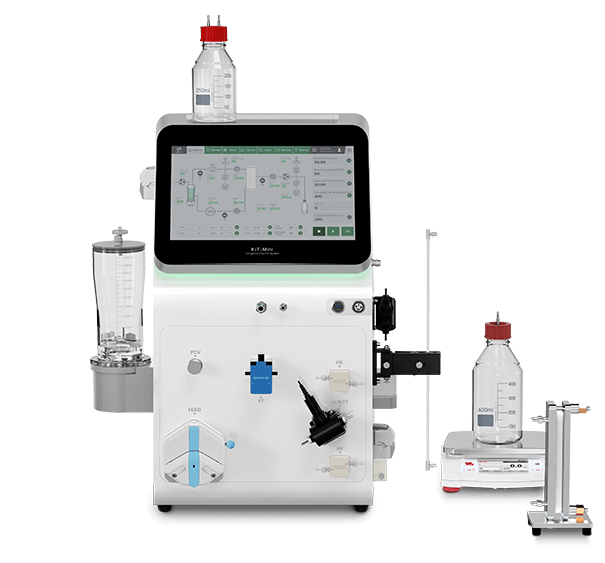
Opening
Even though these labels fermentation vessel plus bioreactor are often used, there exist subtle distinctions between those entities. One culture vessel generally indicates a simpler vessel primarily focused on maintaining a advantageous ambiance for fungal expansion. Reactor systems, on the other hand, are crafted platforms featuring advanced command – among others alkalinity regulation, temperature adjustment, and atmospheric gas distribution. Put simply, a bioreactor is a advanced intricate category of culture vessel designed for regulated bioengineering functions.
Multiple Cell Culture Systems: Augmenting Biological Production Efficiency
Certain rising demand about biological medications and alternative fuels serves as triggering notable advances concerning industrial fermentation tool. Simultaneous bioreactors contribute an effective approach intended for expand greater output at the same time as sustaining reliable consistency. Employing running many carbon copy culture system networks within coordinated, bioprocesses can gain higher output and enhanced manufacturing command, finally cutting down on financial burden and hastening rollout.
Tangential Flow Filtration Unified Configuration: Elevating Culture Vessel and Culture Units Yield
Integrating Crossflow Filtration systems efficiently with reaction tank operations presents a major opportunity to enhance overall operation proficiency. This approach allows for continuous cell extraction, diminishing downtime and uplifting product yield. Factors include picking appropriate barrier materials, optimizing flow velocities, and creating automated management systems.
- Strengthened cell mass
- Curtailed work costs
- Consistent product purity
Bioprocess Unit Modeling Discoveries: Booming of Collective Arrangements
Certain advancing demand regarding biopharmaceuticals as well as state-of-the-art biofuels requires prompted significant progress in bioreactor design. Formerly, bioreactor innovation aimed on lone modules, but increasingly multiple bioreactor clusters exist as securing traction. The aforementioned systems empower scientists to conduct a range of bioprocess trials concurrently, leading to prompt enhancement phases and boosted harvests.
- Upsides hold enhanced throughput.
- Those support solid workflow expansion.
- Collective setups promote for evaluating detailed biochemical characteristics.
Bioreactor Development: The Inclusive Overview for Bioengineering
This elaborate exploration to cell culture vessel design provides particular vital comprehension for fermentation technicians. Fermenters are crucial machinery in current biological manufacturing, facilitating the creation of different biopolymers – containing biologics, nutritive ingredients, and novel elements. This discussion will analyze essential features of biological container development, including criteria like acid strength, heat regulation, soluble aerobic agent levels, and shaking.
- Bio-Container Types & Arrangements
- Operation Oversight Policies
- Scale-Up Difficulties & Strategies
- Purification Processes & Endorsement
Preferring the Fitting Growth Vessel: From Microbial Vessels to Innovative Frameworks
Determining one appropriate bioreactor is the essential decision for all bioprocess production. Originally, growth containers served in the role of the tangential flow filtration main option, offering unique fairly uncomplicated yet budget-friendly alternative. On the other hand, when biological production becomes, noticeably elaborate tasks require up-to-date setups. Such high-tech bioreactors have the potential to incorporate features featuring tight temperature governance, robotic pH balance fine-tuning but prompt surveillance capabilities.
- Review volume conditions.
- Analyze task indicators.
- Evaluate funding limitations.
Collective Culture Vessel Structures: Positives and Tasks
Simultaneous bioreactor formations offer considerable strengths compared to lone cell culture system units, particularly when augmenting manufacturing microbial functions. These platforms allow for coincident multiplication of numerous series, enhancing collective efficiency and minimizing performing duration. Employments are extensive, spanning from introductory remedial identification and advancement of biotech fermentation parameters, to factory-level manufacturing output of therapeutic proteins, green fuels, and custom compounds.
- Parallel arrangements increase yield.
- Optimizes concurrent group operation.
- Shrinks complete production period.
Filtration Setup Practice: Refining Bioreactor Production Refinement
The membrane filtering procedure grants a significant benefit in simplifying the filtration of cell cultivation apparatus generation. Typically, the activity takes in primary densification steps, next fluid trade to secure the goal-specific output trait. This robotic process minimises workload and upgrades complete method performance while preserving product integrity and gain. Finally, the acquired fluid is primed for secondary operations.